Mini
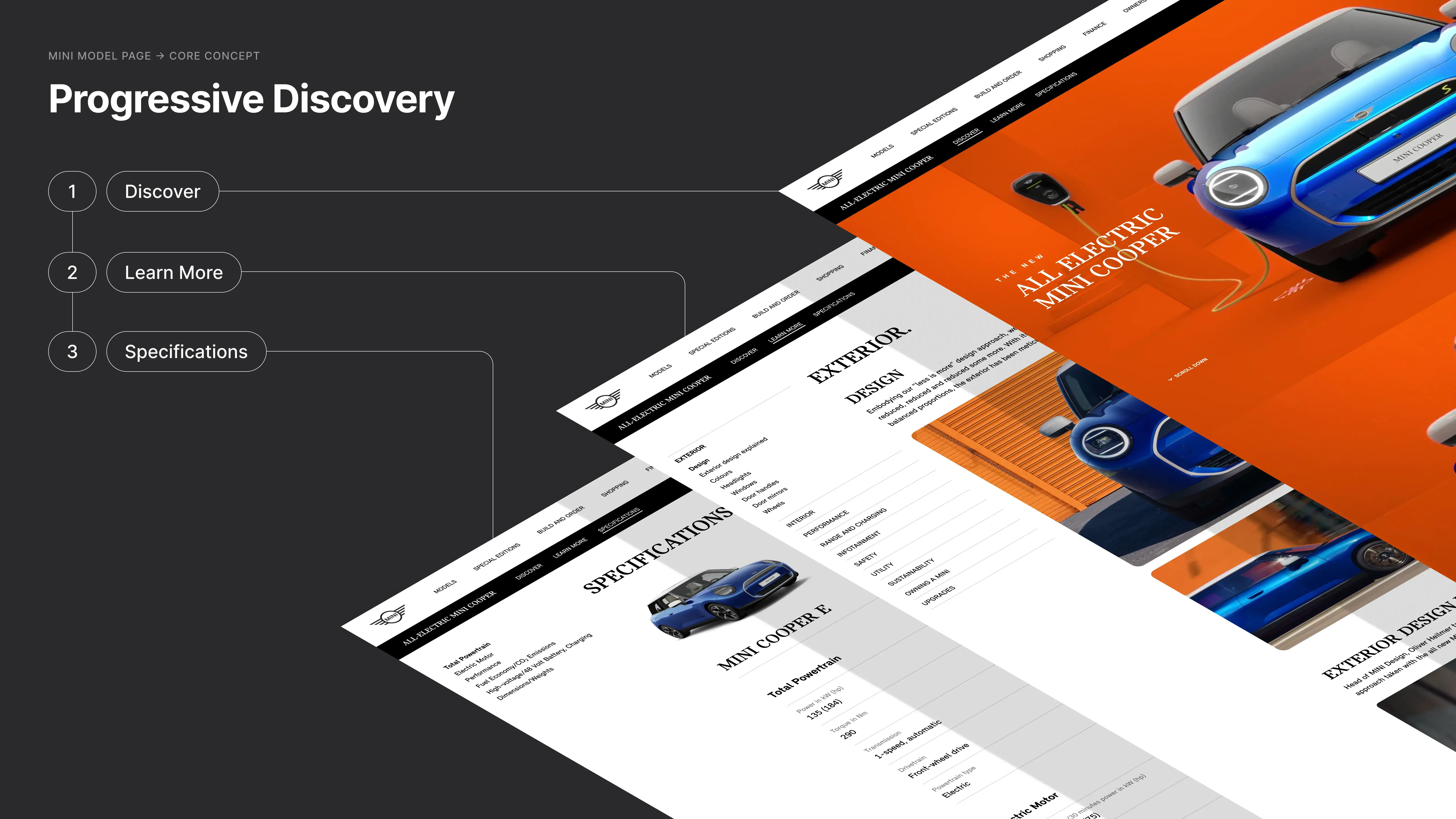
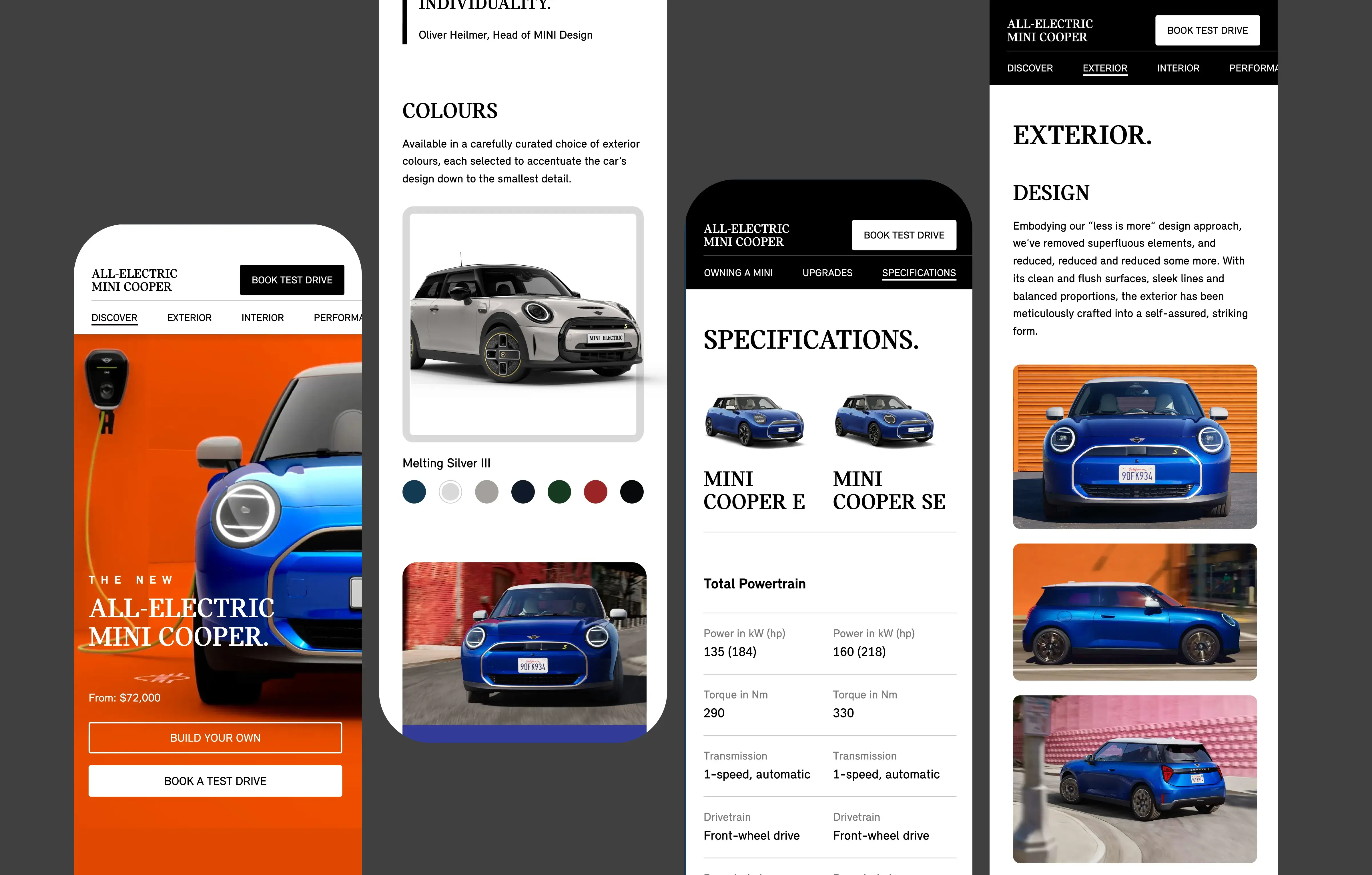
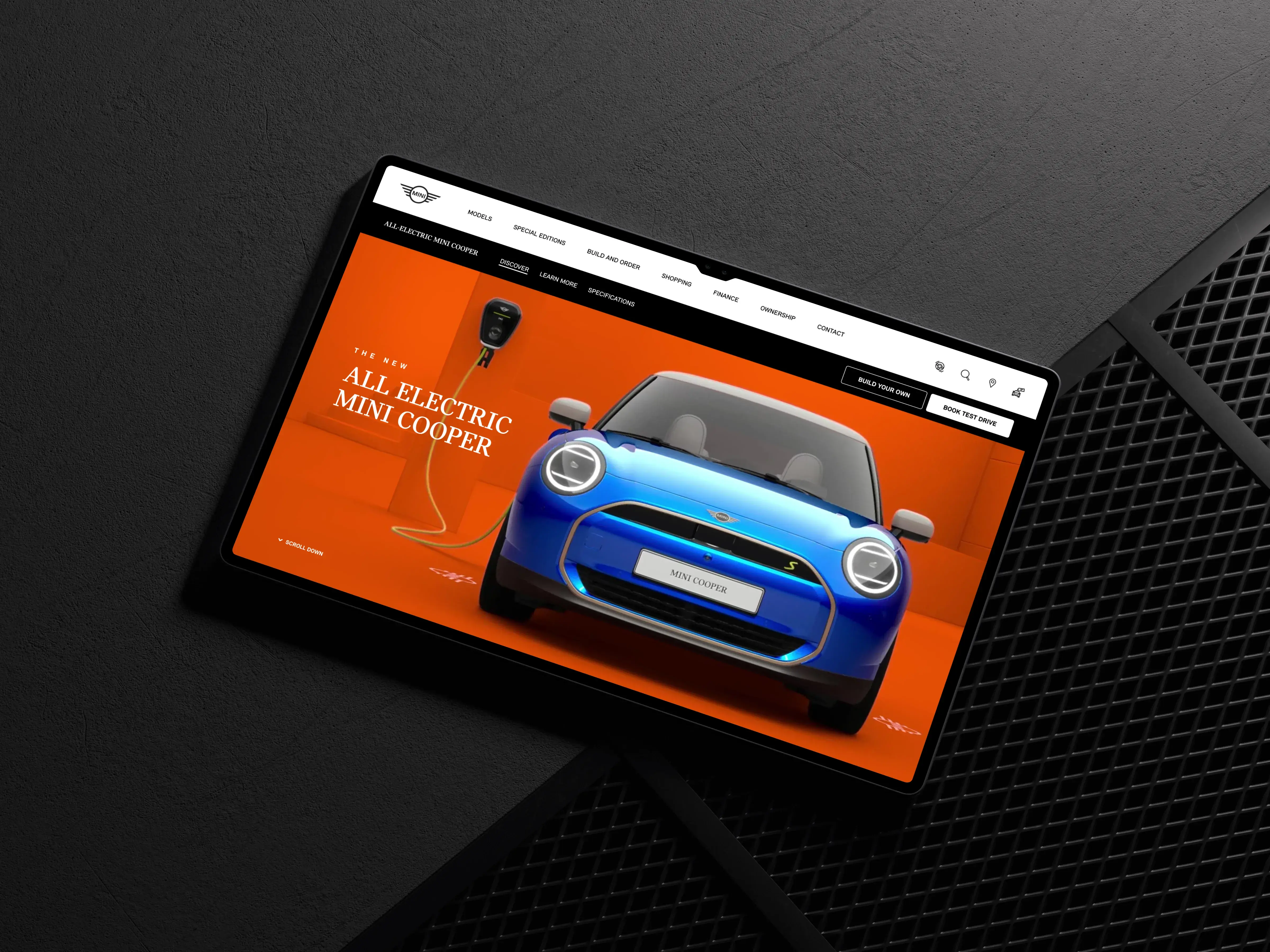
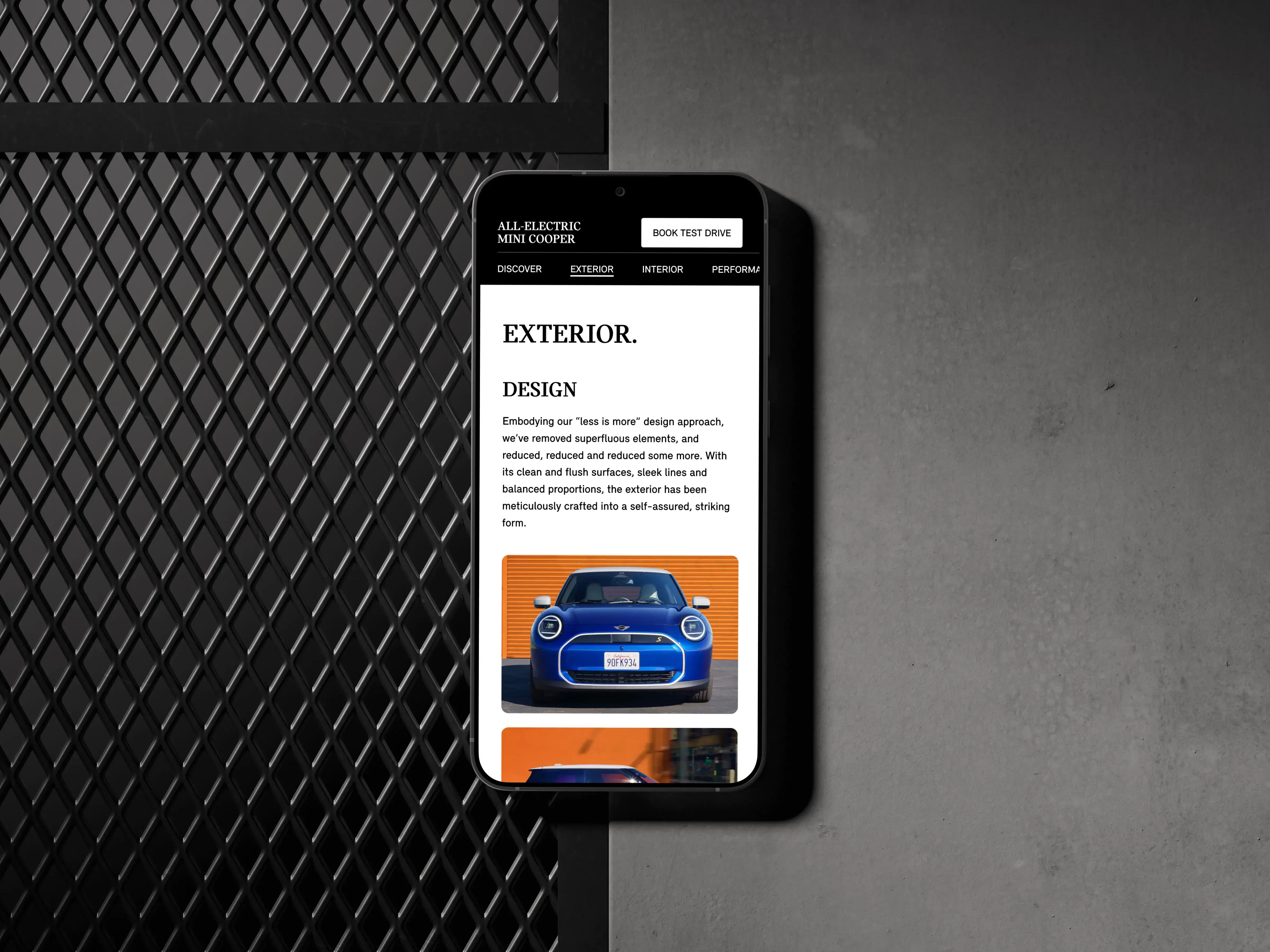
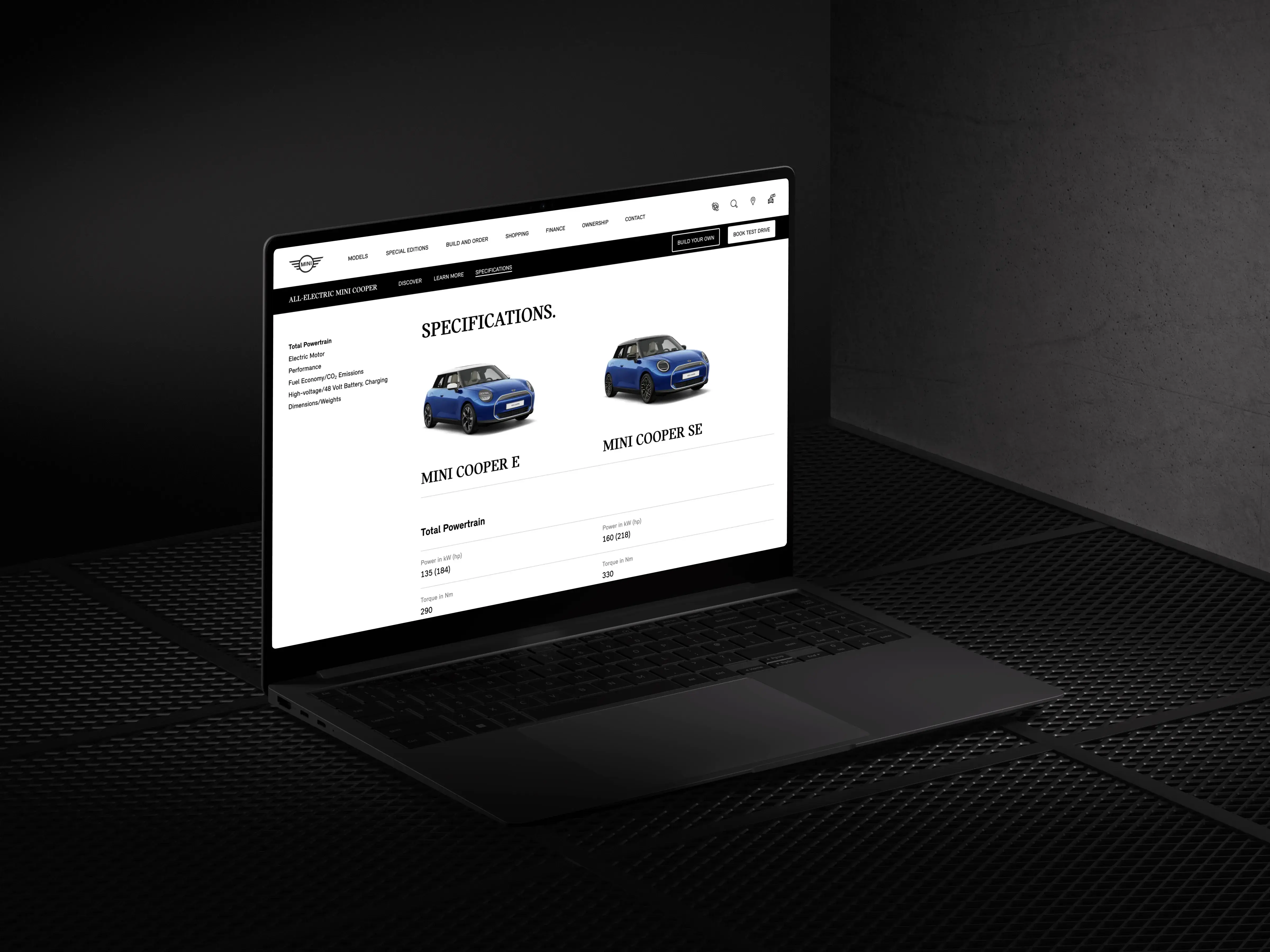
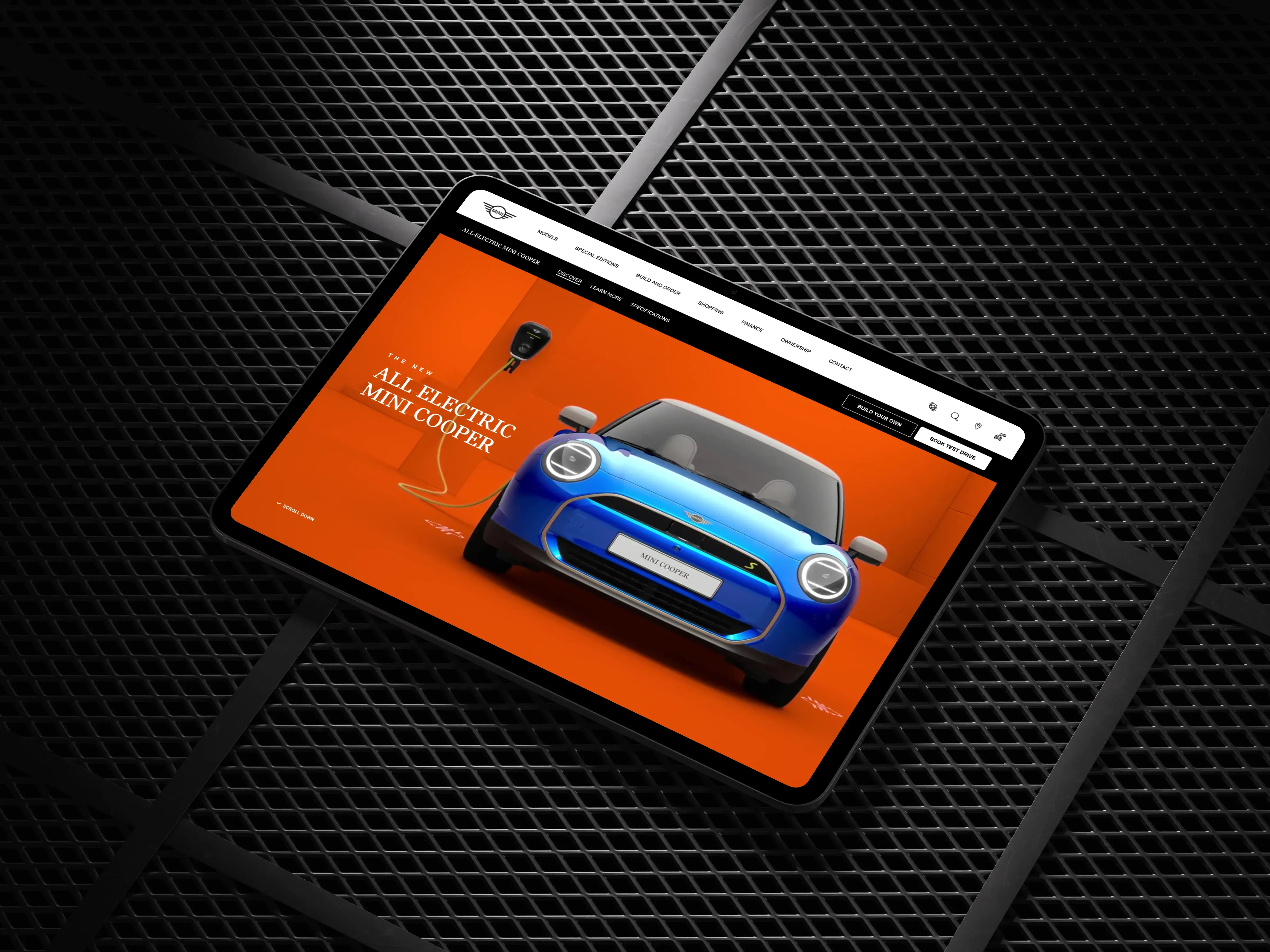
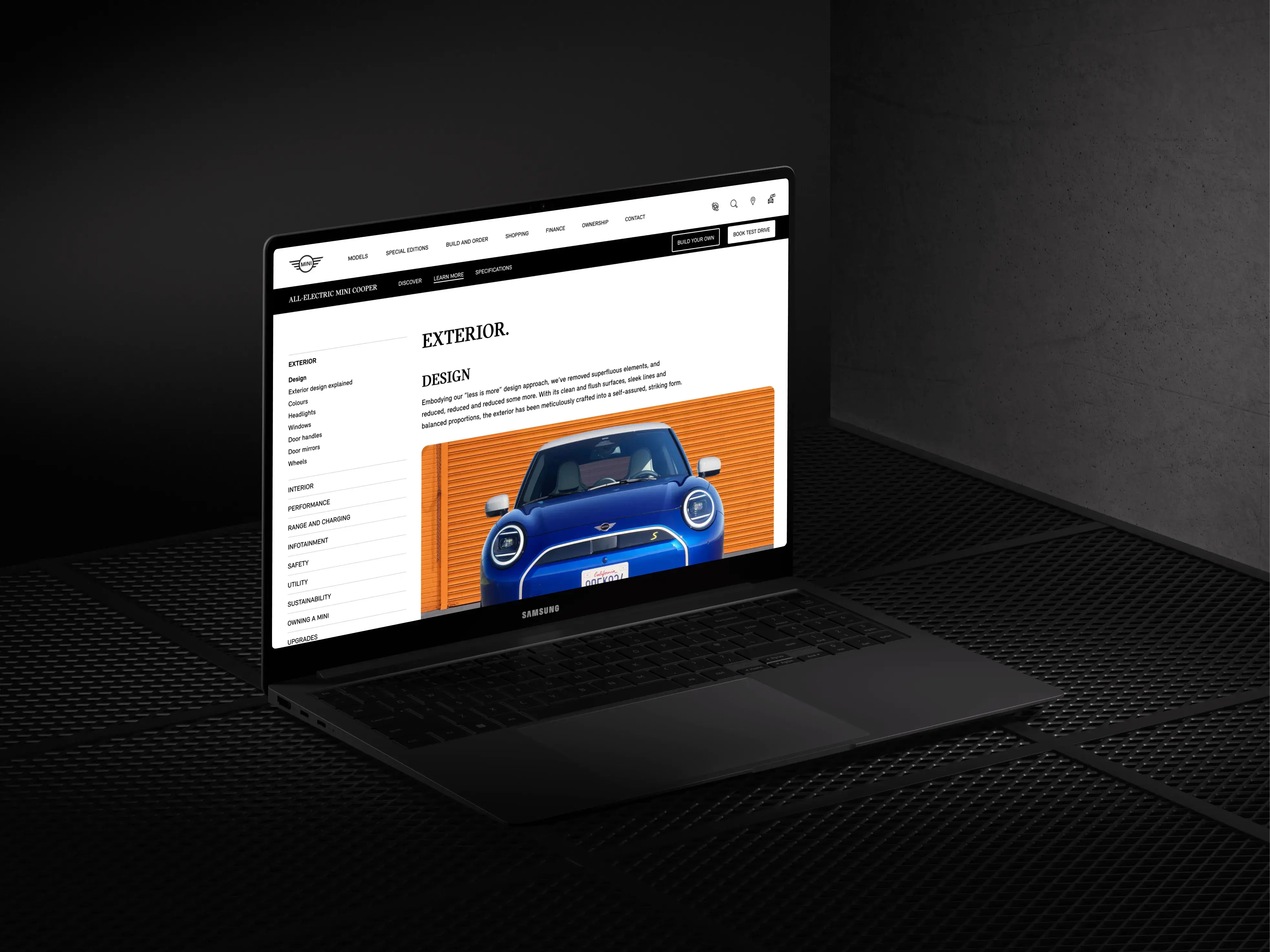
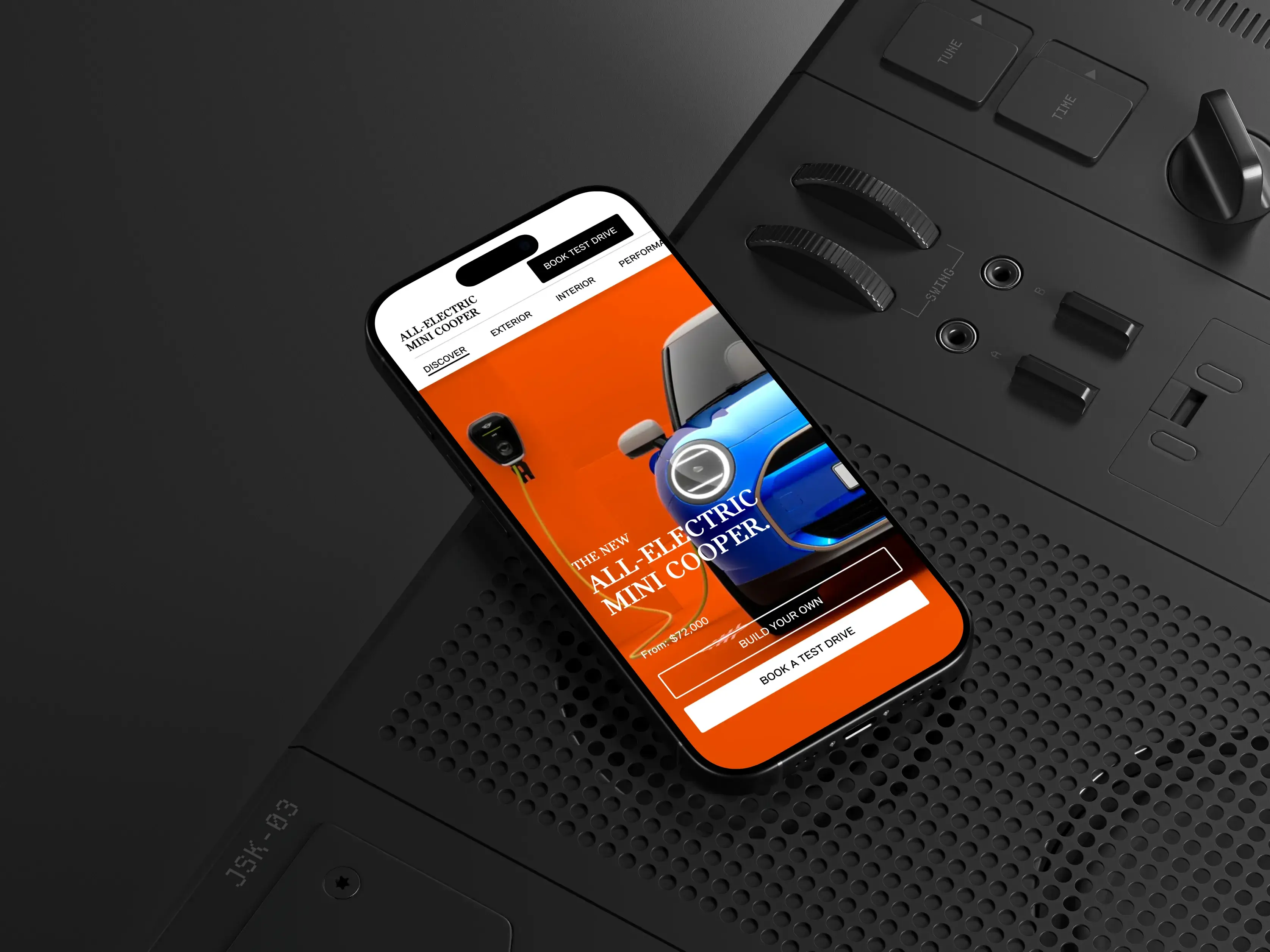
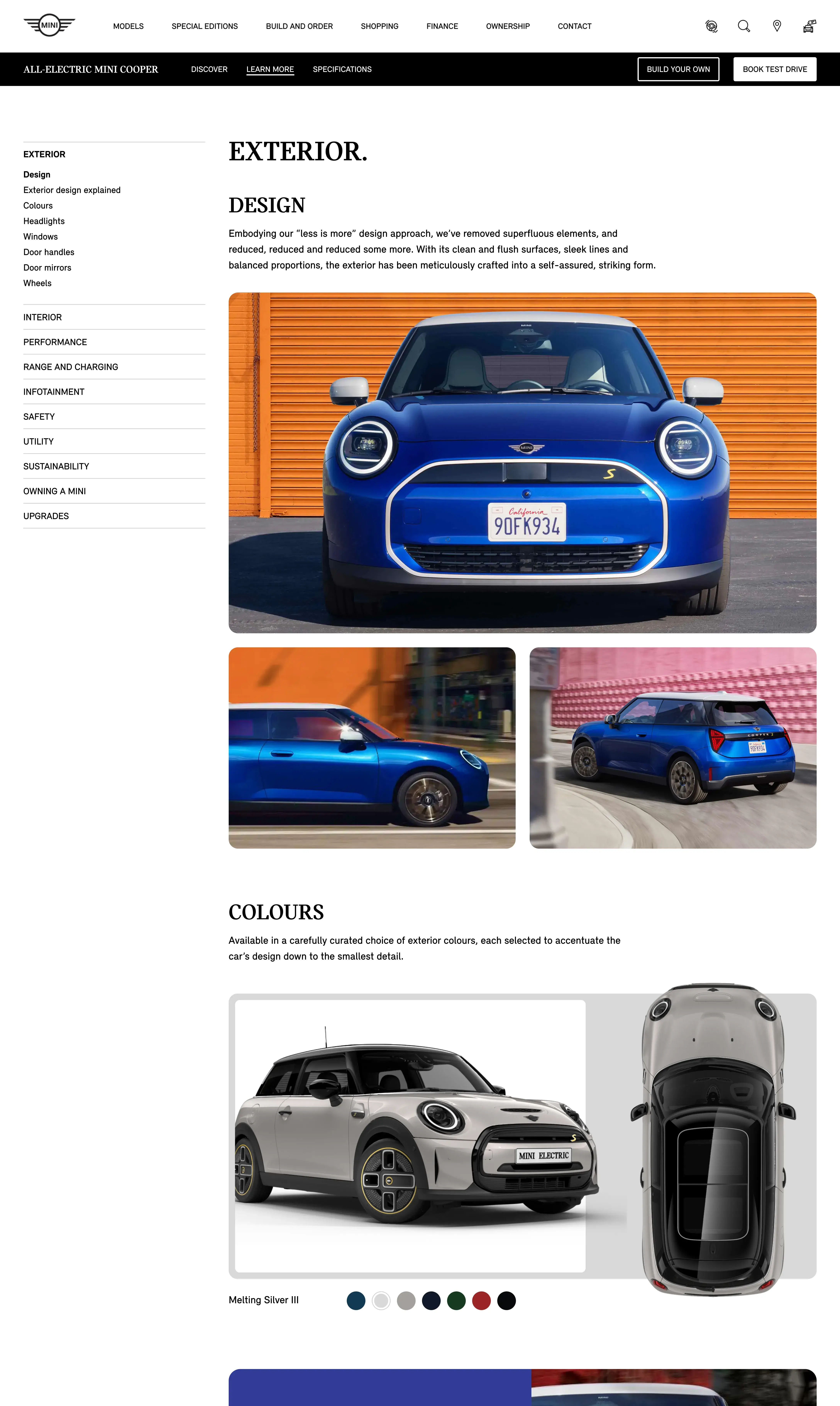
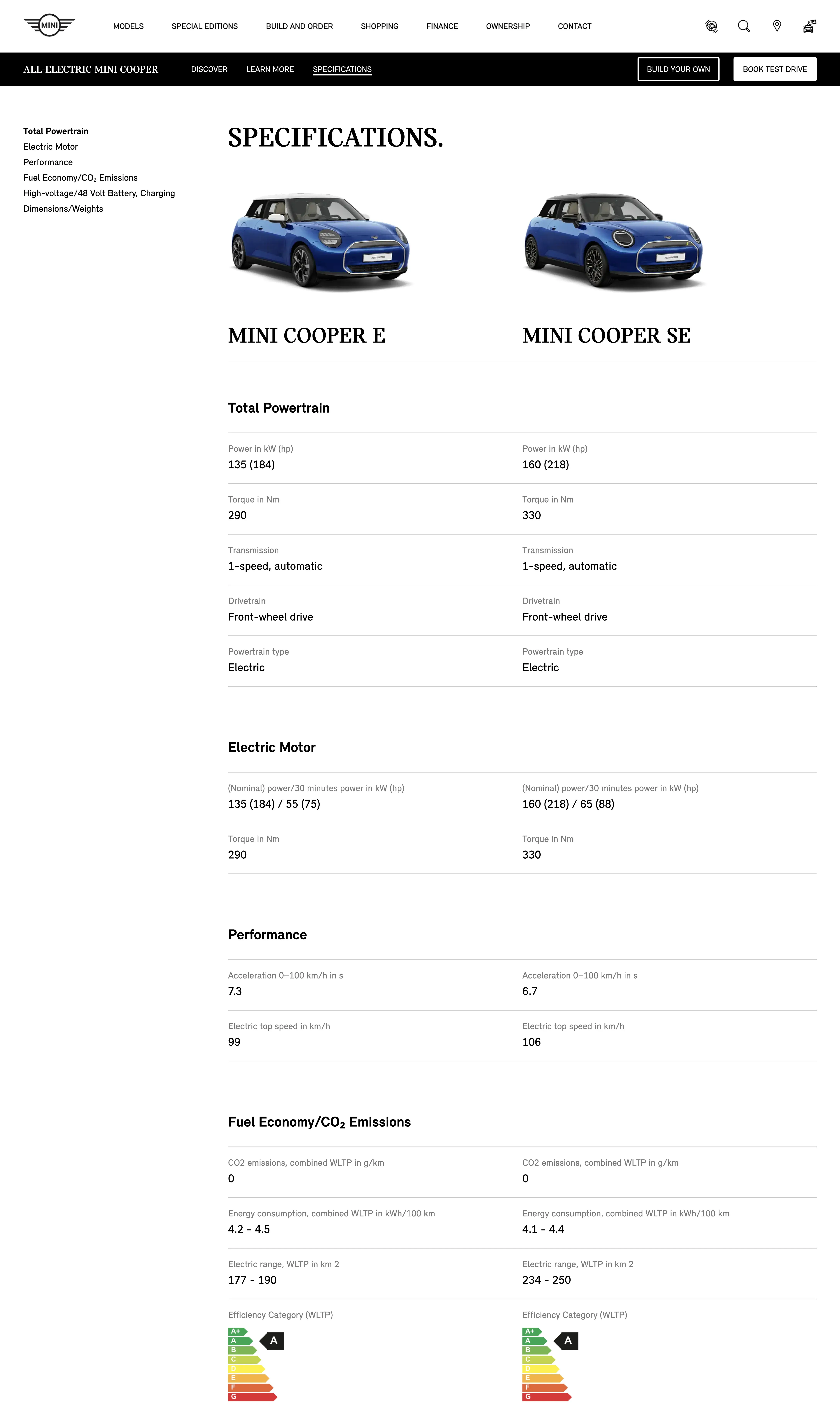
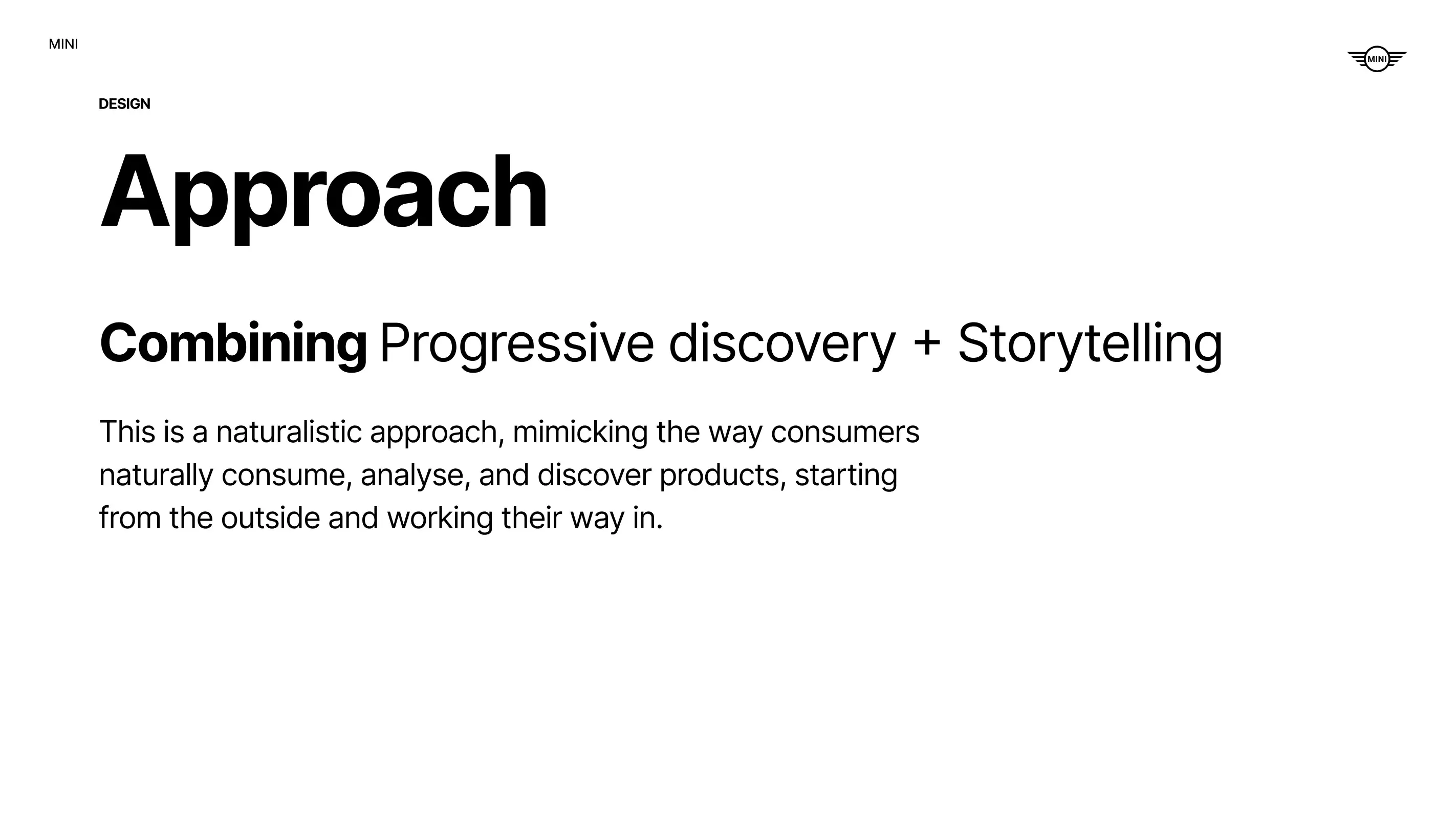
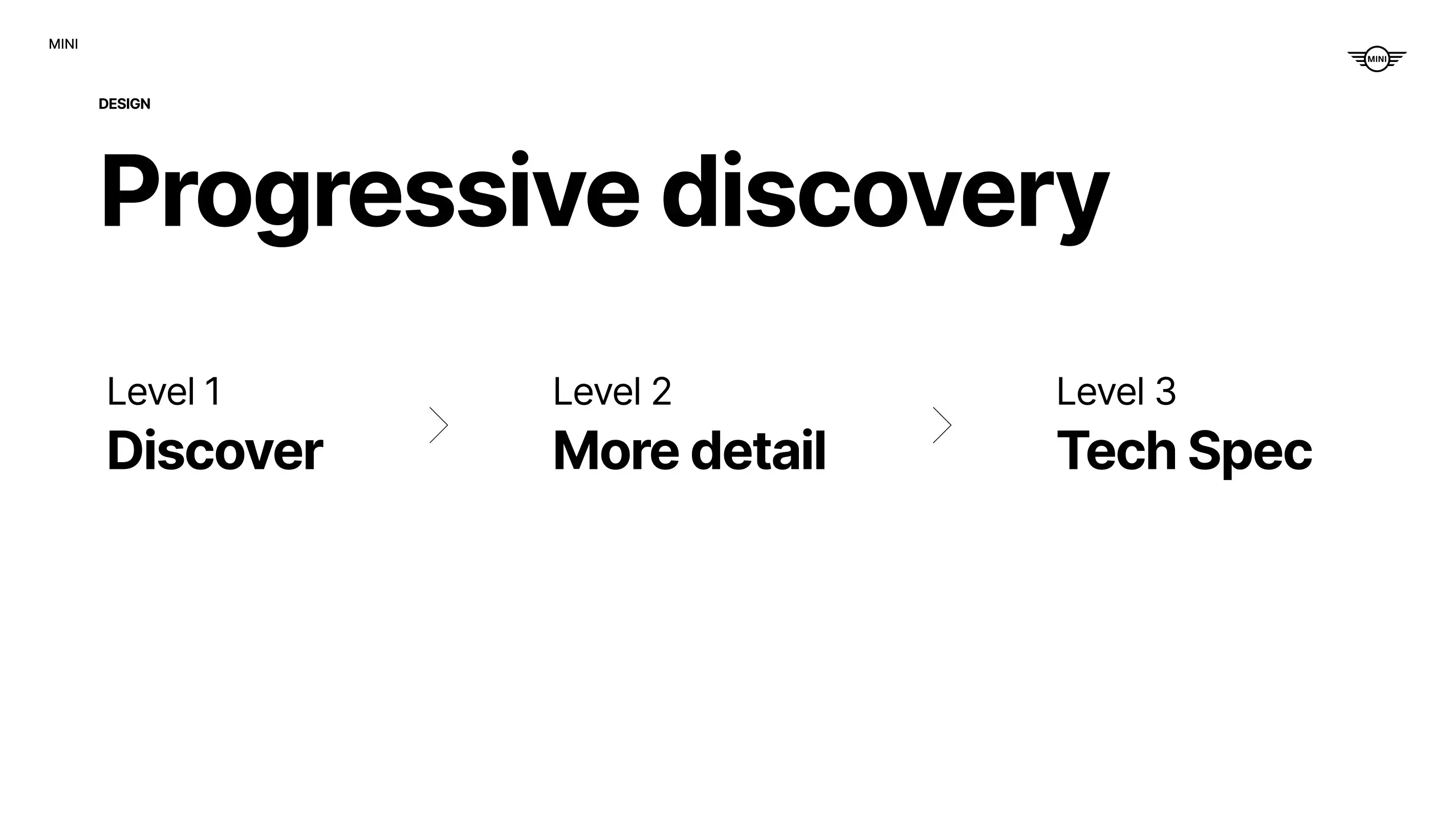
The model page was trying to sell every variant at once. Customers were drowning in options before they'd decided whether the car was for them. The redesign was structured around progressive discovery. Show the car first, the configuration later, the spec last. Built on a fresh information architecture defined by research. Two layers of work, one outcome: a model page that earned the customer's time before asking for it.



Research
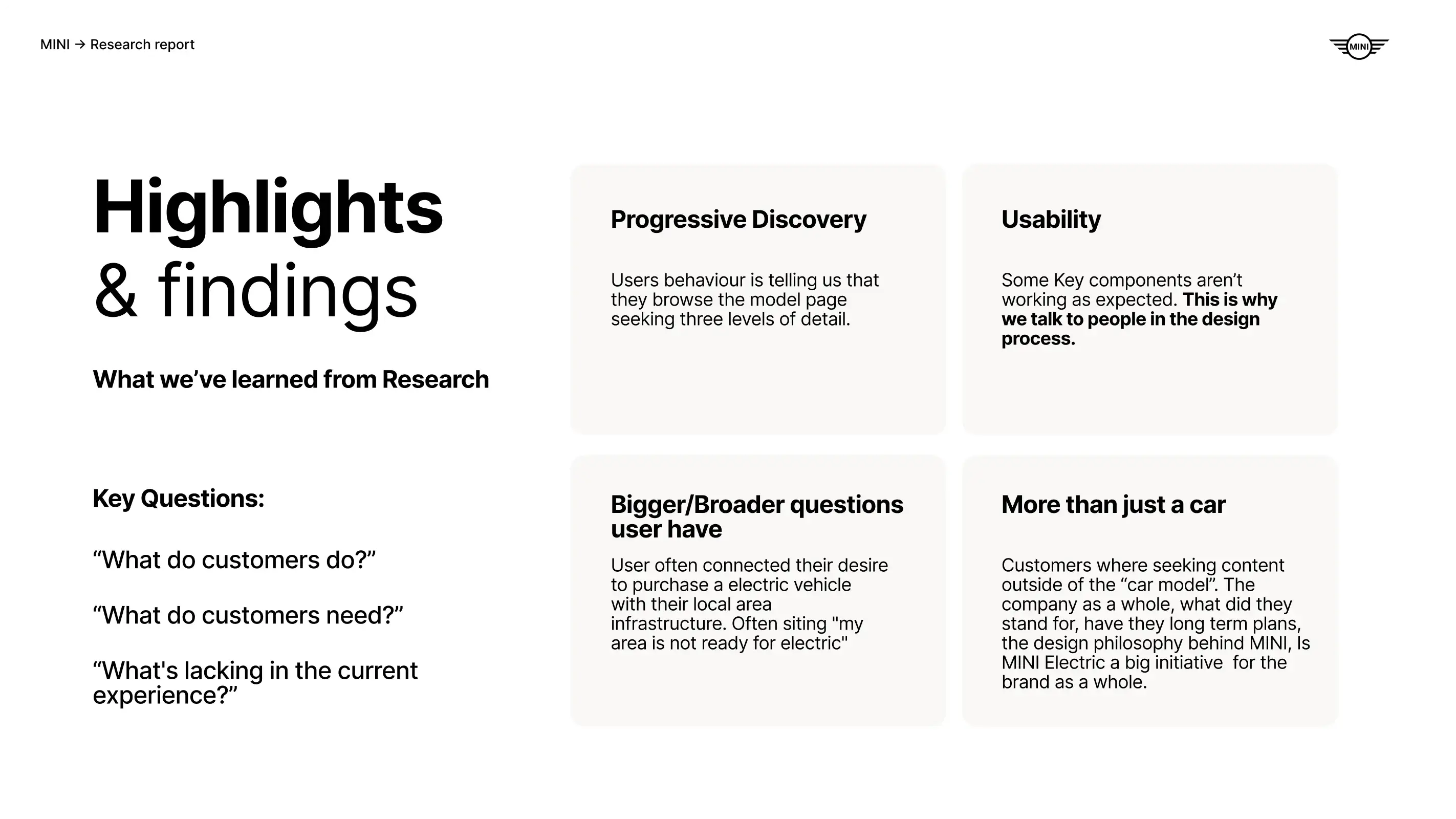
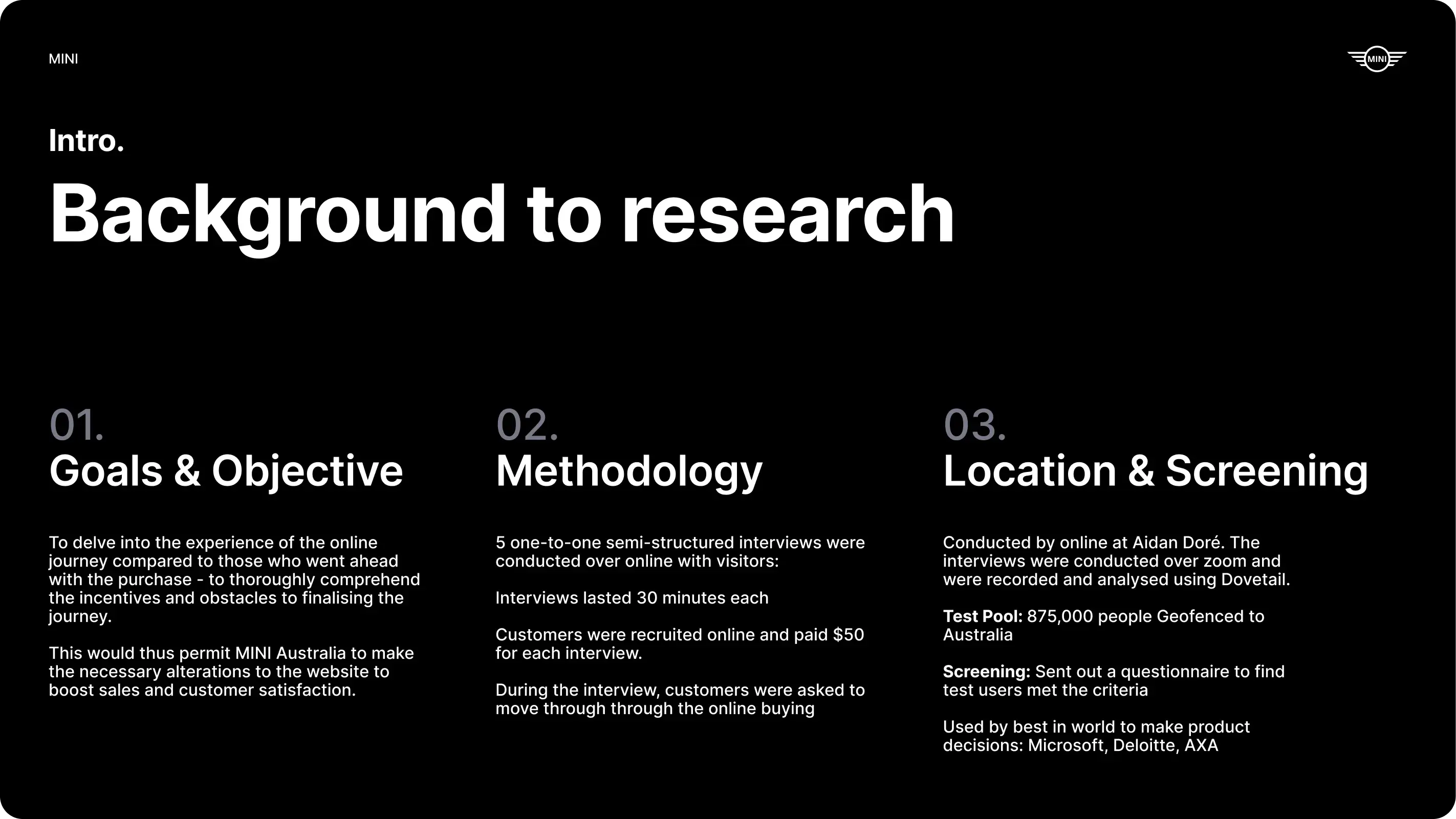
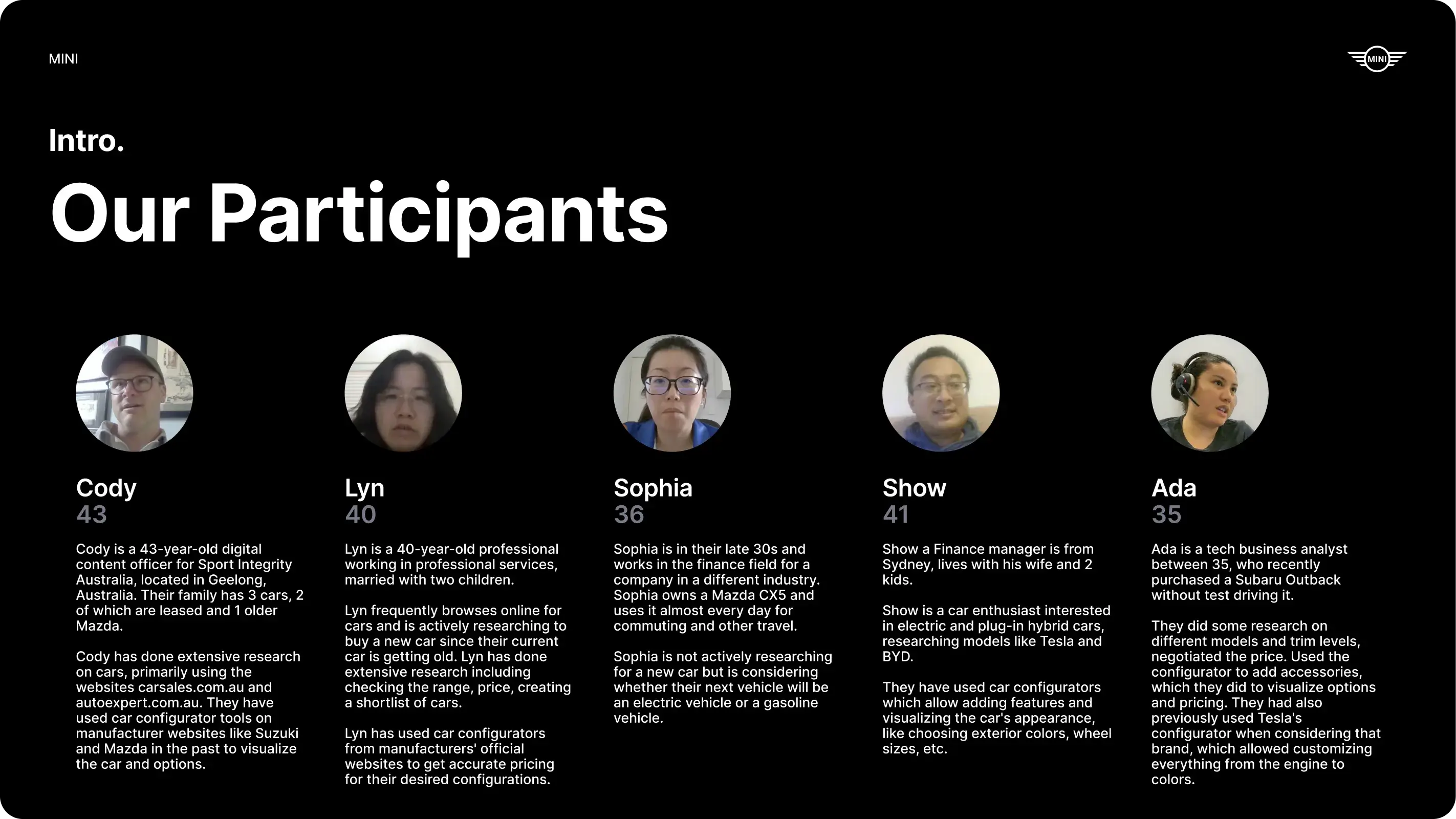
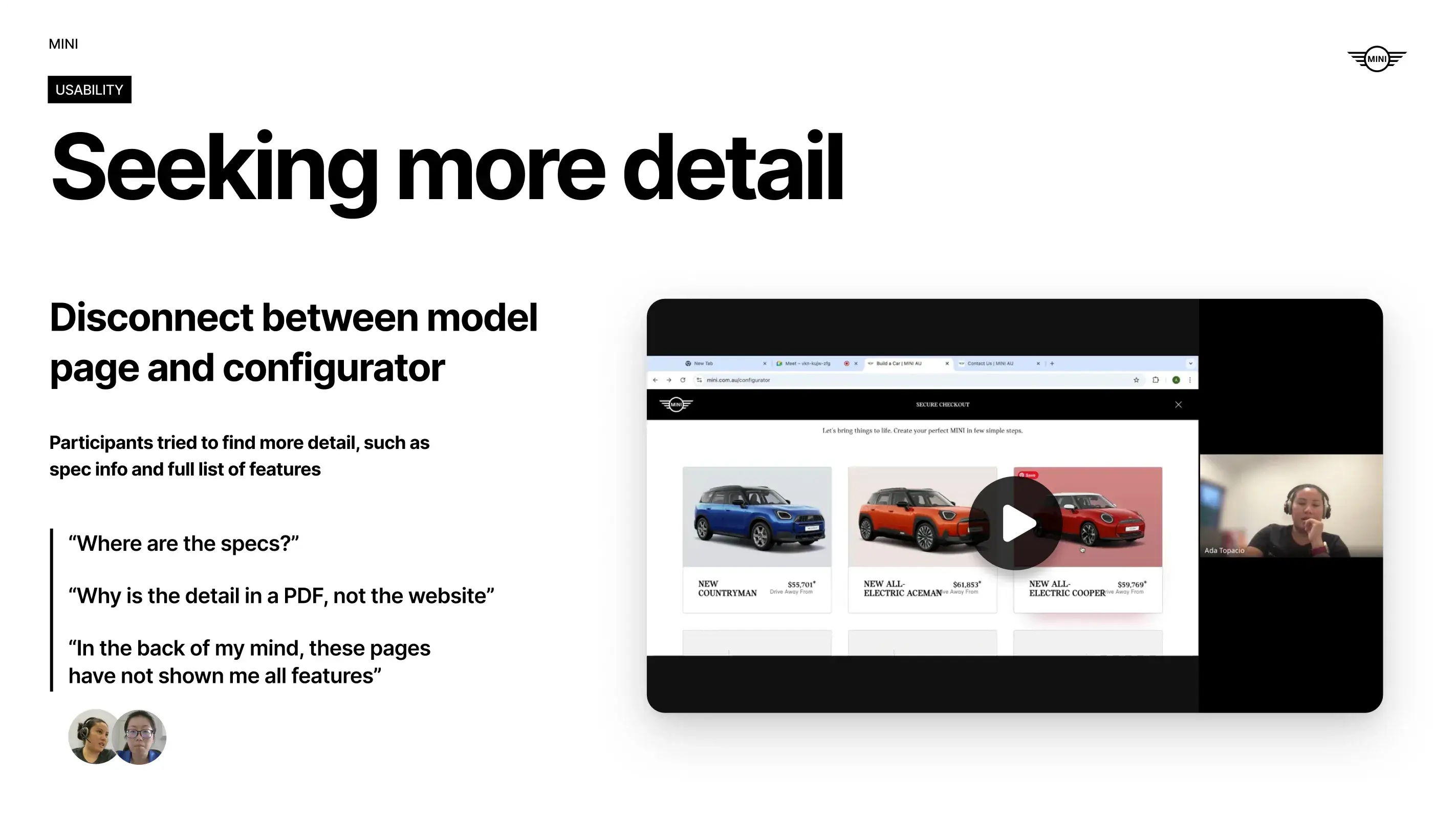
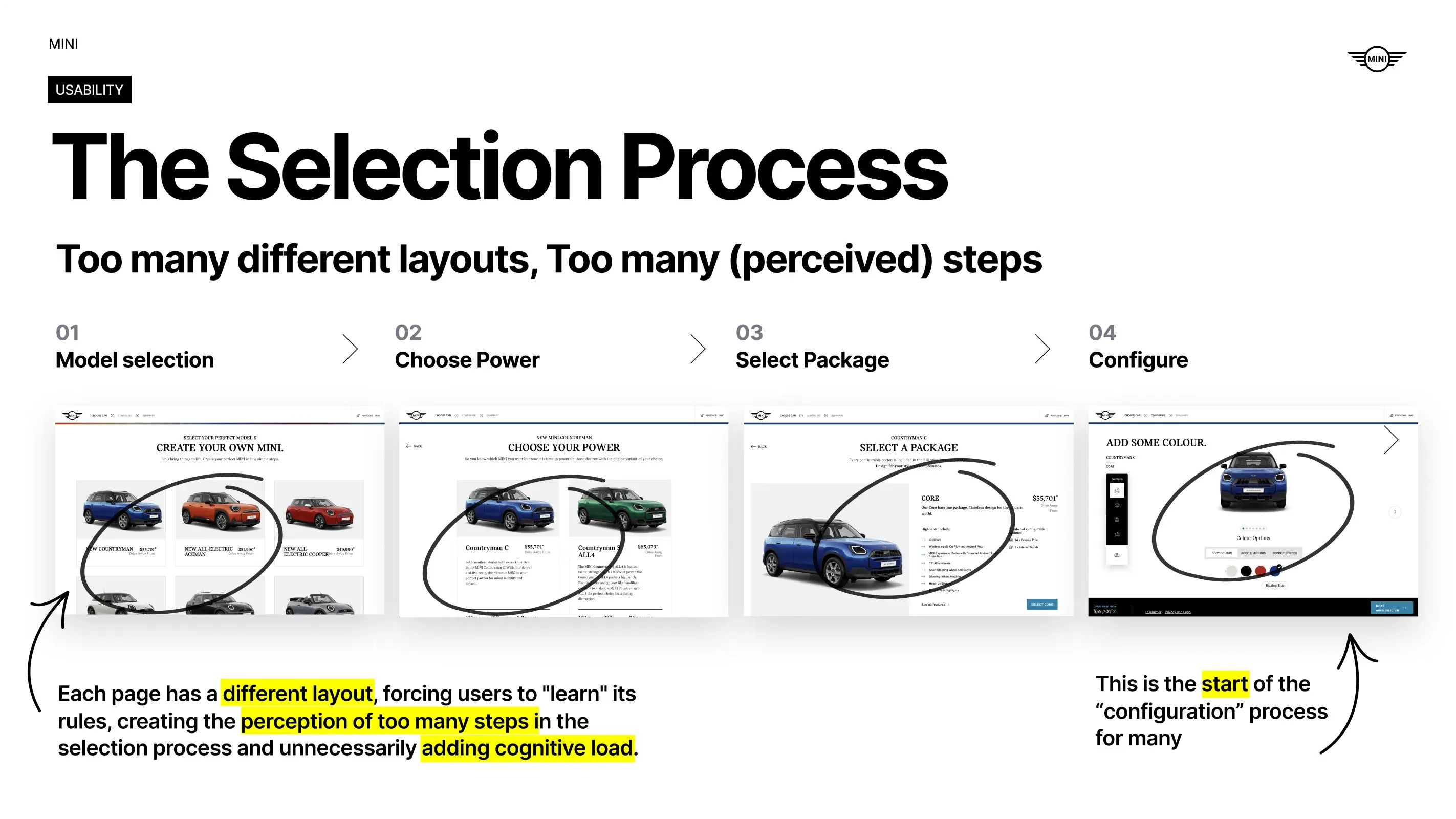
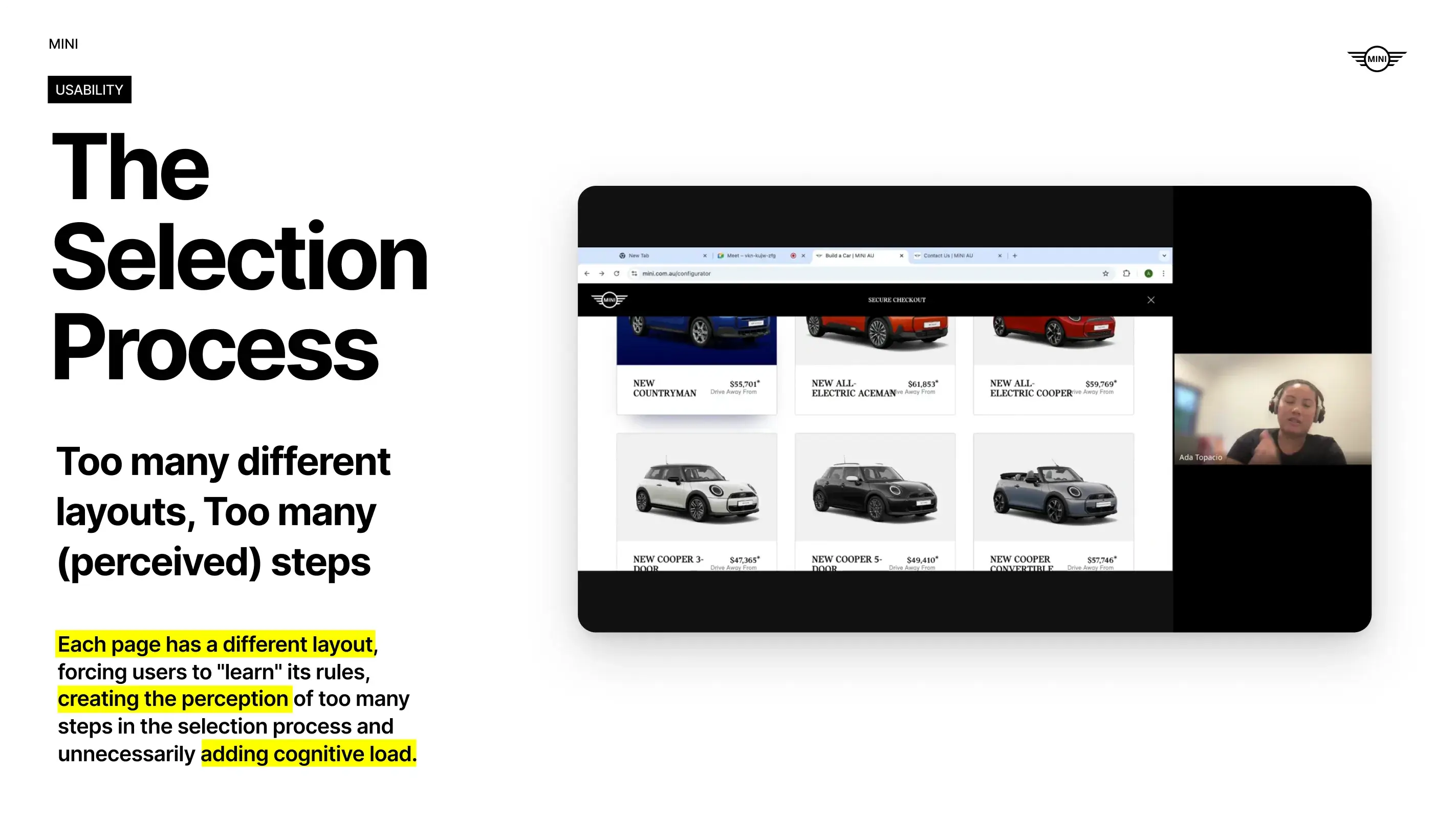
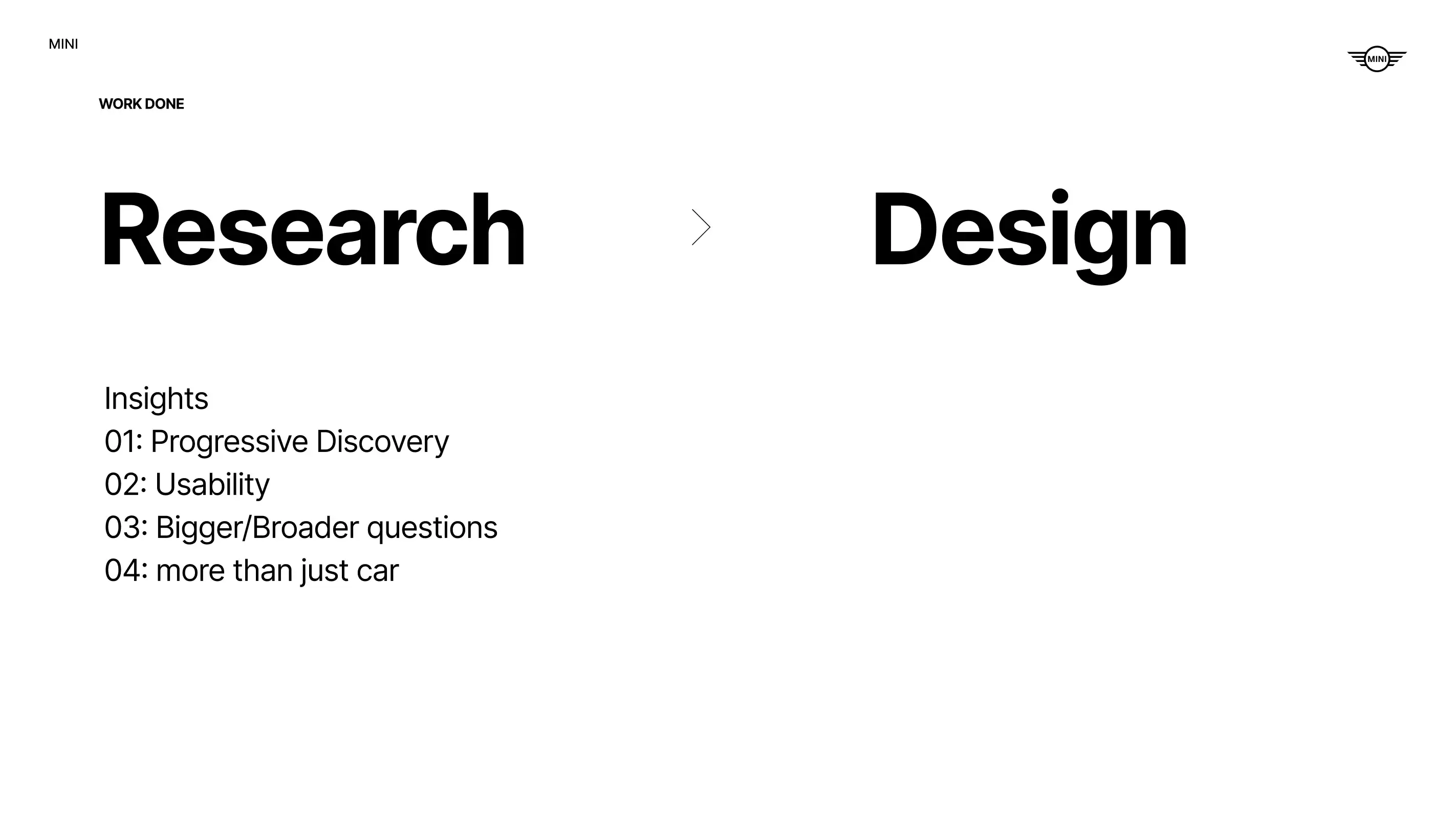
Before any new structure was drawn, the existing experience had to be understood: what customers actually did on the page, where they stalled, what they expected next. The output: a clear picture of what the redesign had to solve.

Site structure
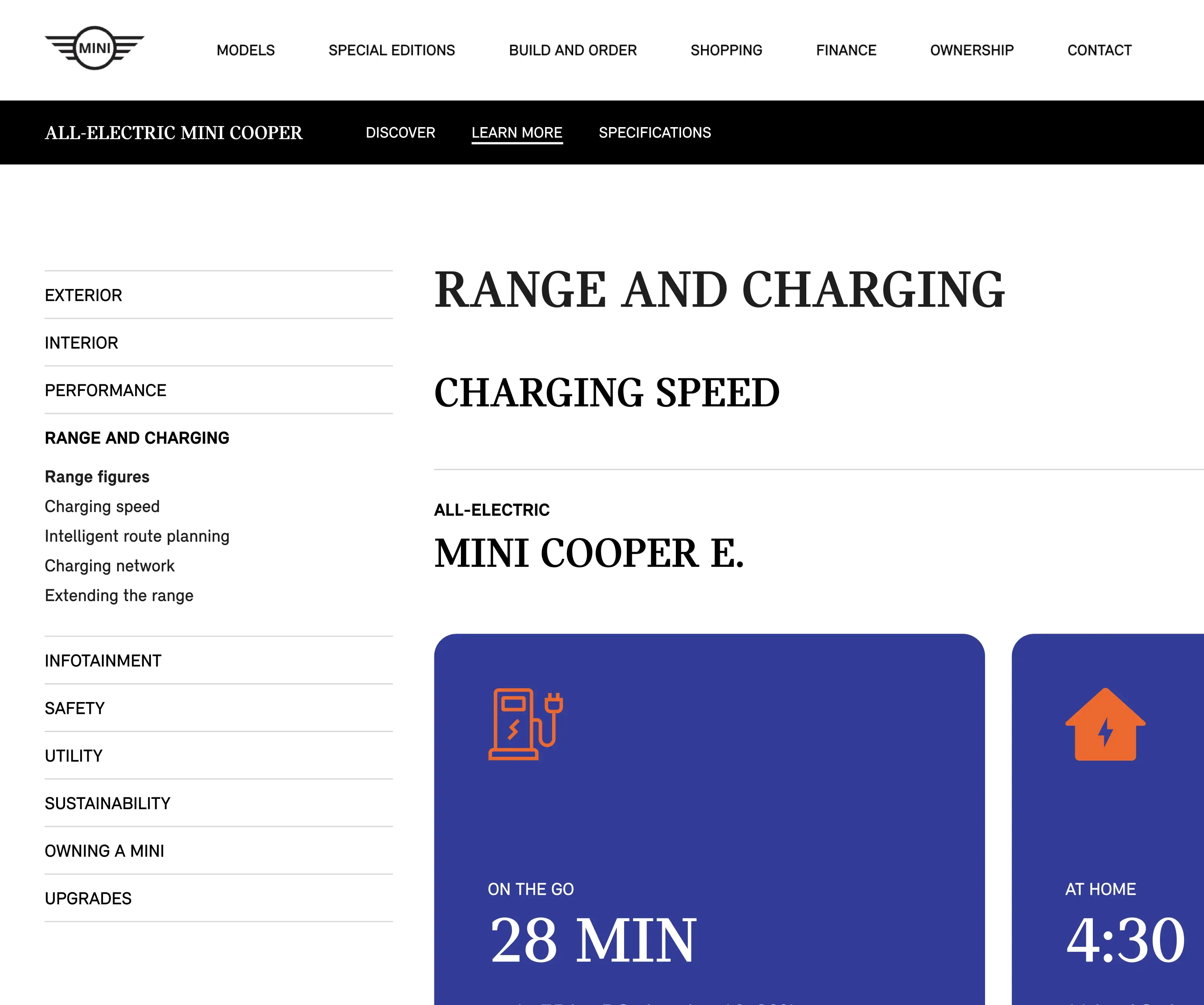
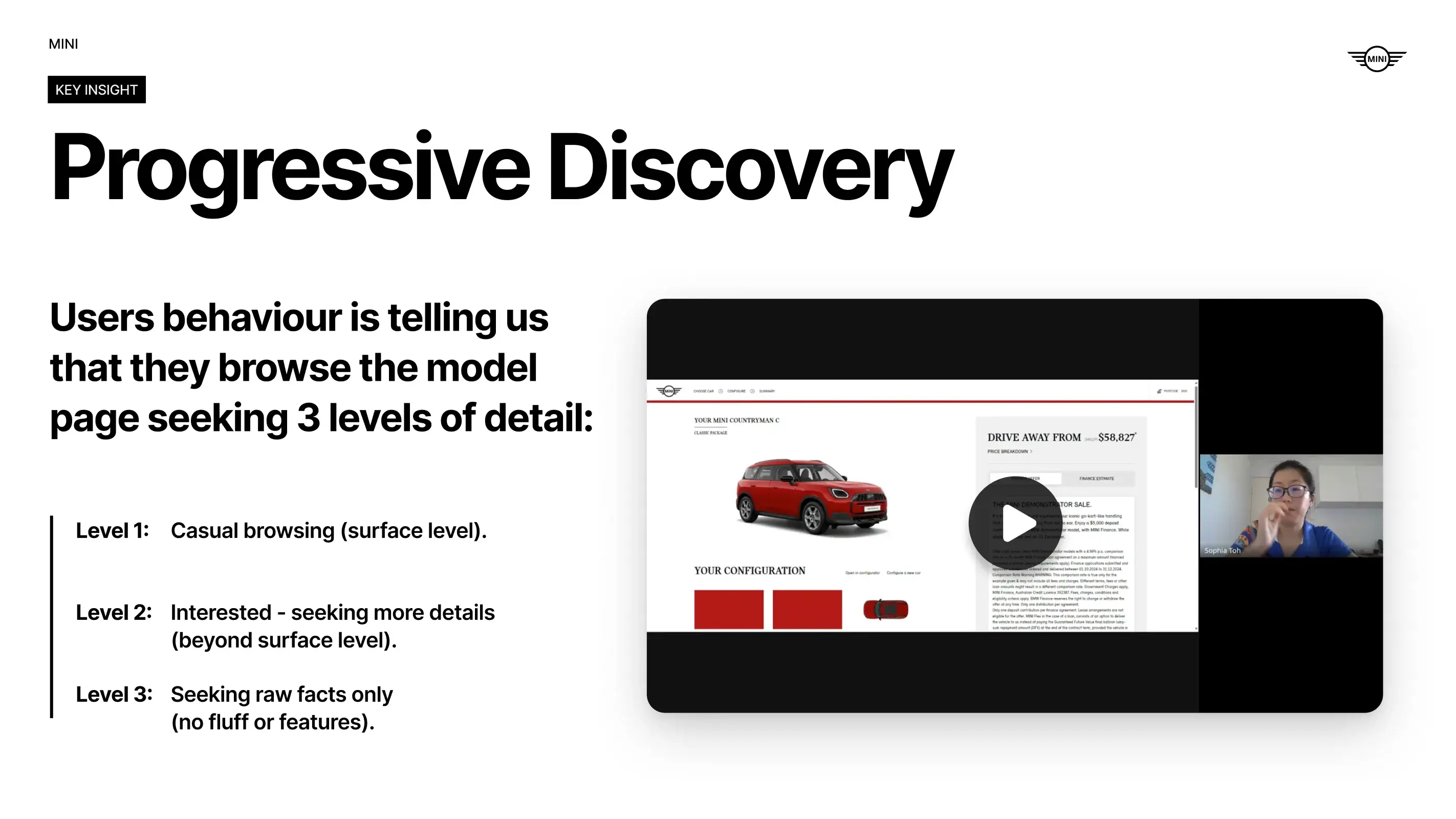
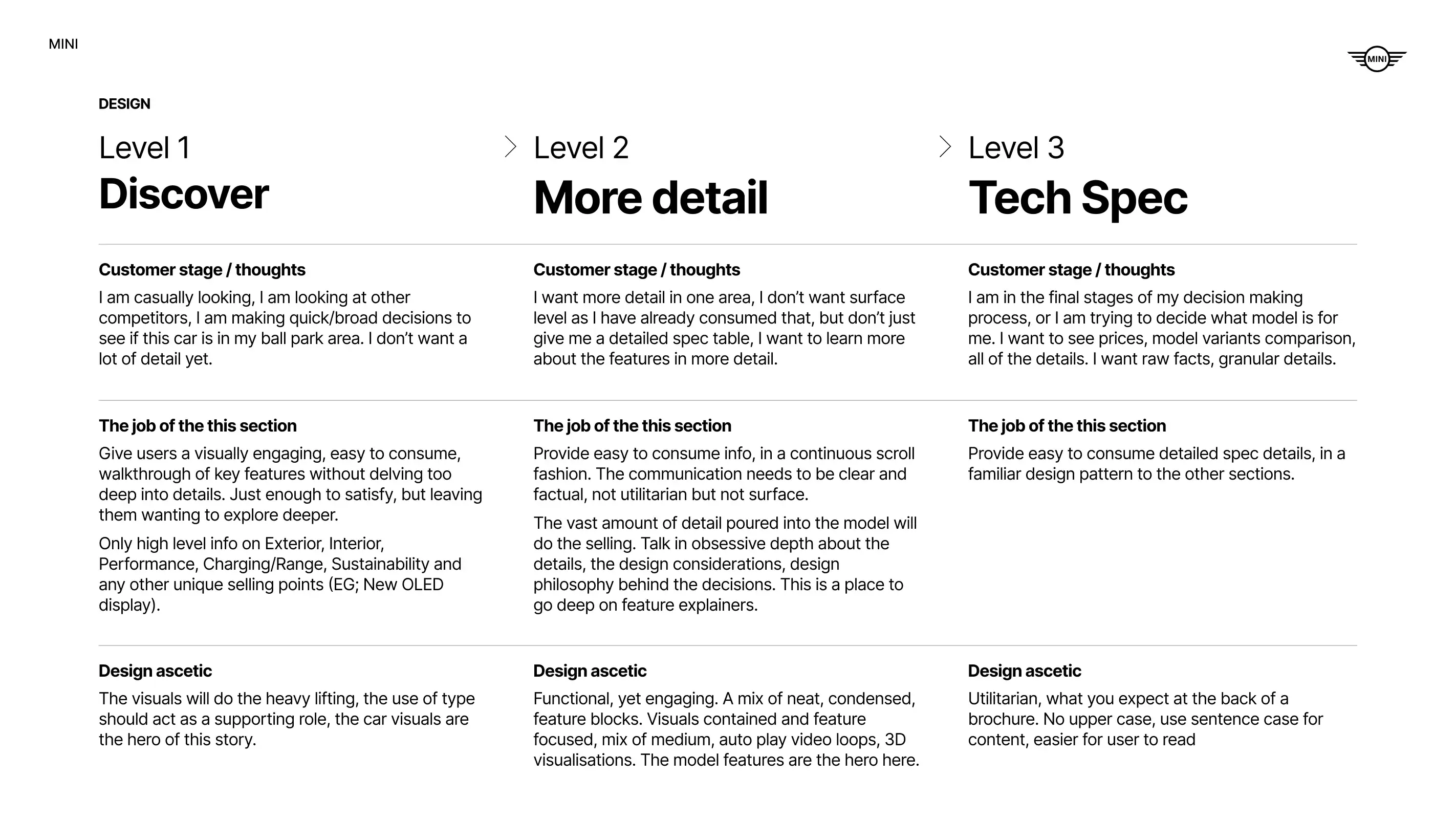
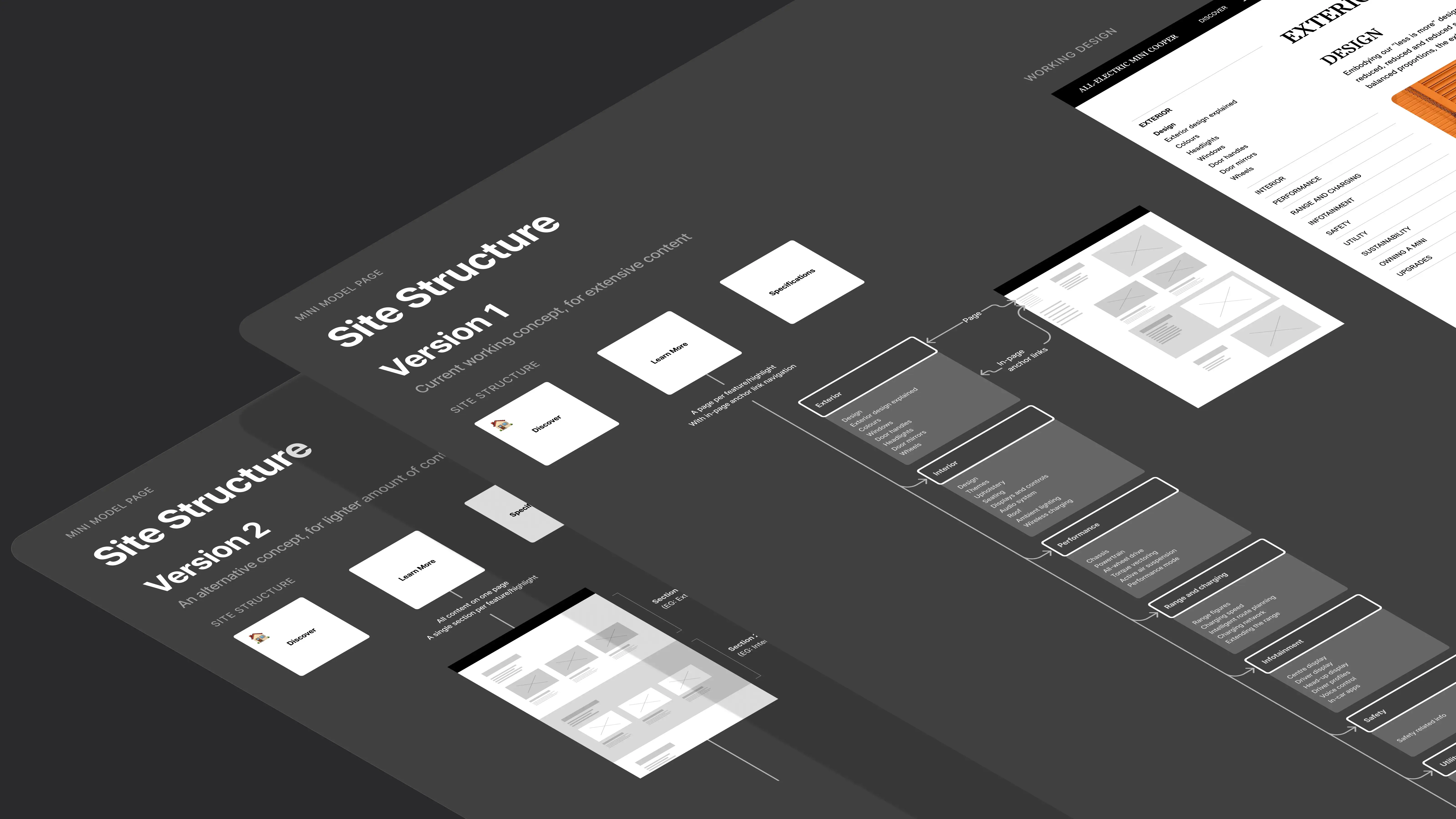
Information architecture works when it matches how customers already think. The research mapped a clear pattern: broad discovery first, then enough detail to compare, then the raw specification for the people who needed it. The structure below started from that pattern, then was re-shaped by hand, keeping the parts that earned their place and cutting the parts that didn't.
Progressive discovery
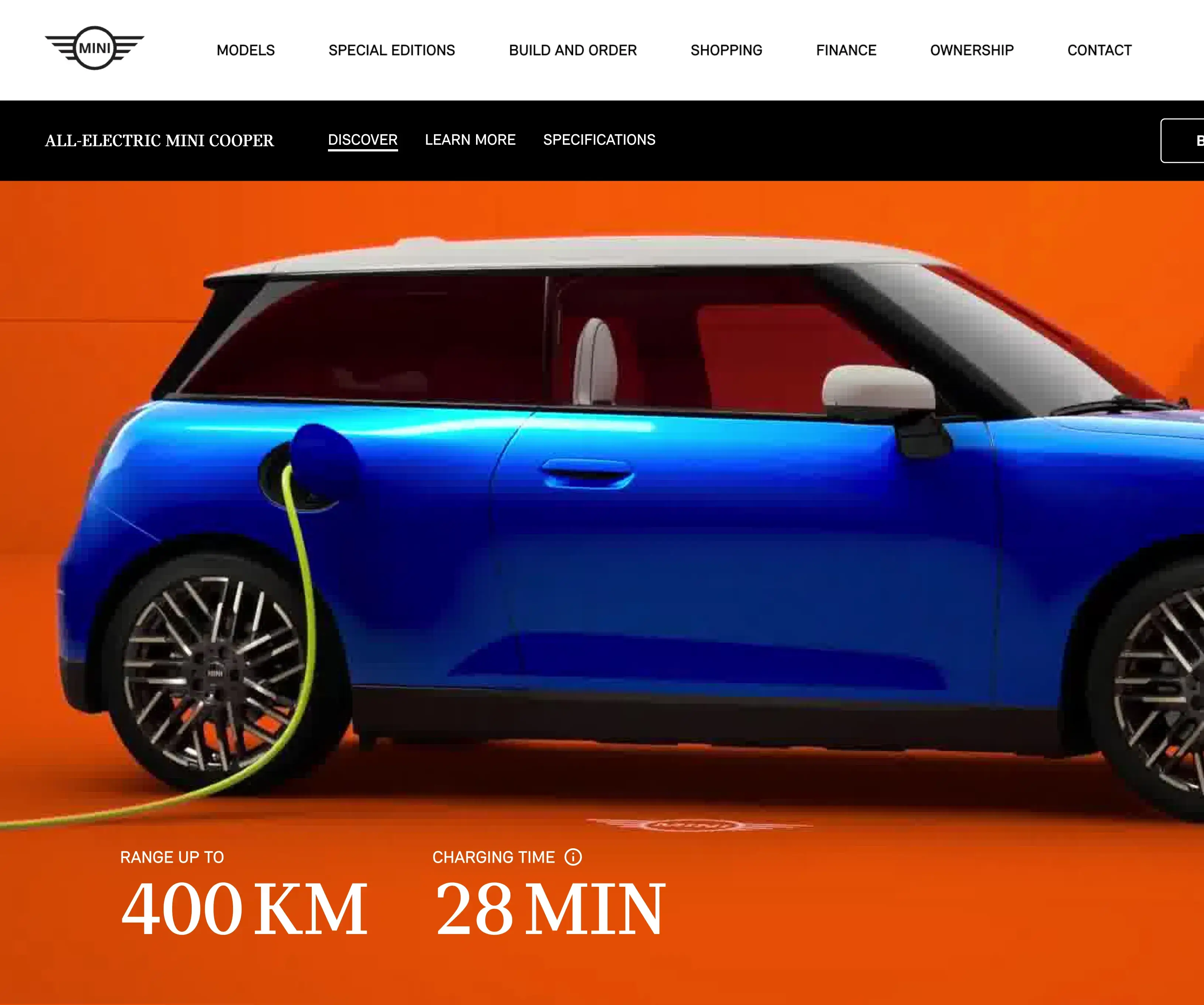
The core concept: don't show everything at once. Let the customer arrive at the car, then the variants, then the configuration, then the spec. Each layer earns the next. The isometric view below shows how the page unfolds.